How to Read a Science Paper Step by Step
Read a research paper in a smart order (abstract, figures, conclusion, then methods) using a three-pass plan, and pull out the claim, evidence, and reasoning.
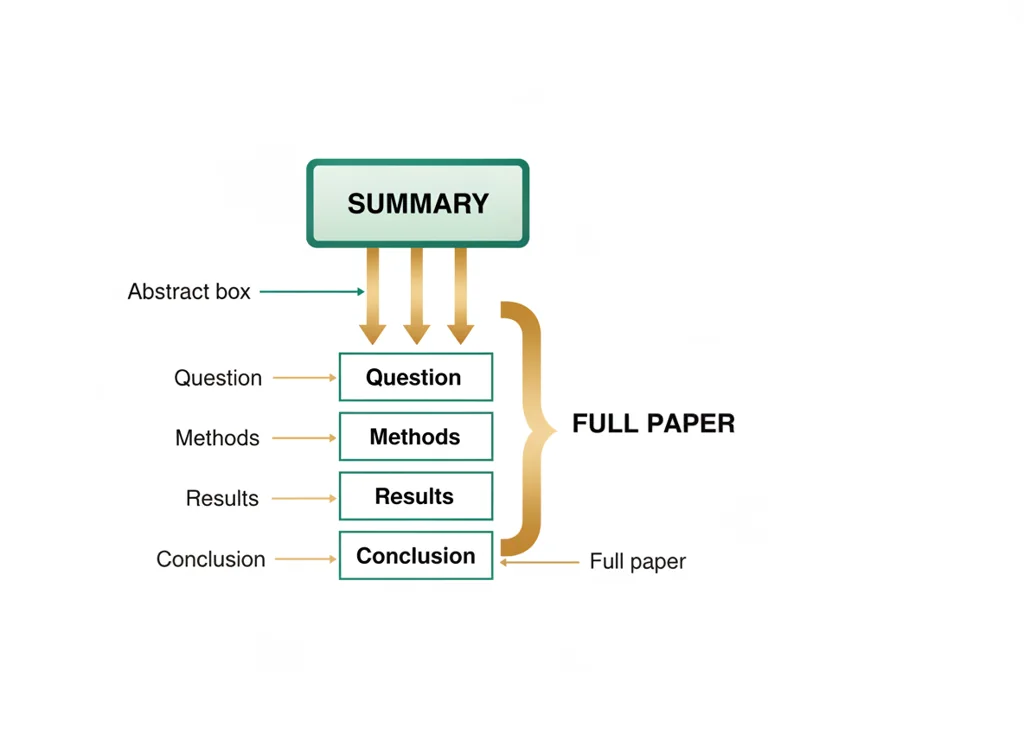
Scientists almost never read a paper straight from the top to the bottom. That would be slow, and most of the details would not stick. Instead, they read in a smart order: the abstract for the big picture, then the figures and tables for the actual results, then the conclusion or discussion for what the authors think it means, and the methods only when they need to judge how the work was done. They do this in passes, getting a little deeper each time, and they read with a pen so they can find the claim, the evidence, and the reasoning. Doctors use this skill to keep up with new treatments without reading every word, researchers use it to screen dozens of papers a week, and science journalists use it to explain a study fairly. Learn the order and the passes, and a paper that looked impossible becomes something you can actually get through.
- Common Core · RST.9-10.2Determine the central ideas of a science text and summarize the key supporting details and conclusions accurately.
- Common Core · RST.9-10.7Translate information expressed in words into visual form (a table or graph) and translate information in a table or graph into words.
- NGSS · SEP-8Obtaining, Evaluating, and Communicating Information: read and evaluate scientific texts and figures to gather and judge evidence.
- Ohio · Ohio ELA RST.9-10.5Analyze how a science text organizes its ideas, including sections such as the abstract, results, and conclusion.
- AP · AP Bio SP 4Analyze and evaluate data and models, including reading graphs and tables to identify patterns and support or challenge a claim.
- Read a value from a graph or table: The figures hold the paper's results, so students must be able to read a bar off a graph or a number out of a table before a paper makes sense.
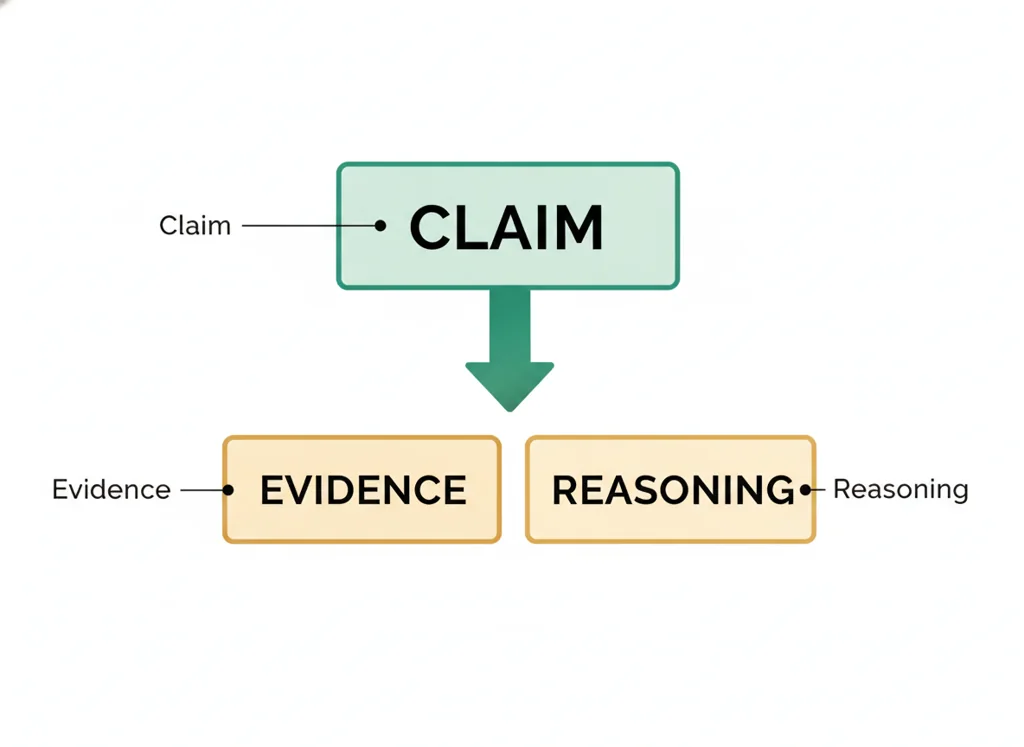
- Tell apart claim, evidence, and reasoning: Reading a paper means finding its claim and the evidence behind it, so students first need to recognize those three moves.
- Separate a main idea from a supporting detail: A smart reading order depends on grabbing the big idea from the abstract before diving into details.
Prerequisites are inferred: pending teacher review.
Re-learn the skill with worked practice and clear examples.
Now read a paper in the smart order and read the figures carefully. The order is: (1) abstract for the big picture, (2) figures and tables with their captions for the results, (3) conclusion or discussion for the meaning, (4) methods only if you need to judge the study. Use the figure below and follow the numbered steps.
Following the smart reading order, you have already read the abstract. Which section should you read SECOND?
Reviewed- A.The figures and tables with their captions
- B.The reference list
- C.The methods, word for word
- D.The author biographies
Show the worked solution ▾
Answer: A. The figures and tables with their captions
- Step 1: Recall the order: The smart order is abstract, then figures and tables, then conclusion, then methods if needed.
- Step 2: Pick what comes after the abstract: Right after the big picture, you go to the figures and tables to see the actual results.
Why it's right: In the smart reading order you read the abstract first and then go straight to the figures and tables, because that is where the results live.
- B: The reference list is not part of the reading-for-results order.
- C: Methods are read last, and only if you need to judge how the study was done.
- D: Author biographies are not part of the reading order at all.
Aligned to Ohio ELA RST.9-10.5: analyze how a text is organized · reading level ~grade 9
The bar graph shows survival after treatment for two drugs. Which statement is BEST supported by the figure?
Reviewed- A.Drug B had higher survival than Drug A.
- B.Neither drug had any survivors.
- C.The two drugs had equal survival.
- D.Drug A had higher survival than Drug B.
Show the worked solution ▾
Answer: A. Drug B had higher survival than Drug A.
- Step 1: Read each bar's value: Read up from each bar to the y-axis. Drug A reaches 40 percent and Drug B reaches 75 percent.
- Step 2: Compare the two: 75 percent is greater than 40 percent, so Drug B had higher survival.
Why it's right: The Drug B bar reaches 75 percent and the Drug A bar reaches 40 percent, and 75 is greater than 40, so Drug B had higher survival.
- B: Both bars are well above zero, so both drugs had survivors.
- C: The bars are different heights (40 versus 75), so survival was not equal.
- D: This reverses the bars; Drug A is at 40 percent, which is lower, not higher.
Aligned to Common Core RST.9-10.7: read a value from a graph · reading level ~grade 9
A paper's discussion says: 'The vaccine group had 3 infections while the placebo group had 30, showing the vaccine lowered infections because it trained the immune system to fight the virus.' In this sentence, which words are the EVIDENCE?
Reviewed- A.'The vaccine group'
- B.'it trained the immune system to fight the virus'
- C.'3 infections' and '30' infections in the two groups
- D.'the vaccine lowered infections'
Show the worked solution ▾
Answer: C. '3 infections' and '30' infections in the two groups
- Step 1: Name the three parts: Evidence is the specific data, the claim is the main point, and the reasoning is the science idea that links them.
- Step 2: Find the data: The specific numbers, 3 infections versus 30, are the data pulled from the study, so they are the evidence.
Why it's right: Evidence is the specific data from the study, and the numbers 3 infections versus 30 infections are that data.
- A: This just names a group; it is not the data by itself.
- B: This is the reasoning (the science idea), not the data.
- D: This is the claim (the main point), not the data.
Aligned to Common Core RST.9-10.2: find supporting details · reading level ~grade 9
- A student reads a two-page article in the smart order and writes one sentence for the big picture, one for the main result, and one for the meaning.
- A lab group reads only the figures of a paper and reports what each graph shows before reading any body text.
- A student highlights the claim in a discussion paragraph and underlines the numbers that serve as evidence.
Fill these in as you work through the lesson.
- Abstract (one paragraph that gives the big picture):
- Figure (a graph or table that holds the results):
- Three-pass reading (read in three rounds, each one deeper):
- Methods (how the study was done; read to judge trust):
Read the first for the big picture, then the for the results, then the conclusion for the meaning, and the only if you need to judge the study.
- In your own words, what does the first pass of a three-pass read try to do?
- Where in a paper do the actual results live, and why do you read that part before the methods?
- Name one reason you would open the methods section.
A paper's discussion says the vaccine group had 3 infections versus 30 in the placebo group because the vaccine trained the immune system. Label the parts: Claim: ____. Evidence: ____. Reasoning: ____.
The vocabulary of this topic, shown in the way you will meet it.