The Introduction & Body
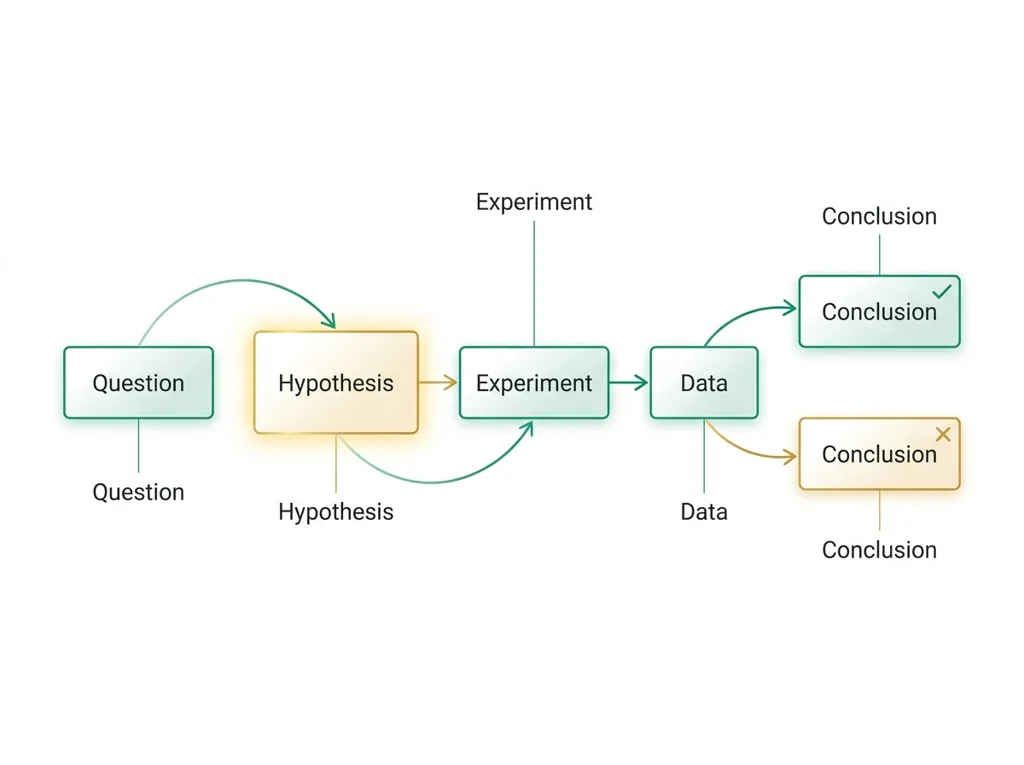
Open a paper the way scientists do: give background, ask the question, state a testable hypothesis, and say why it matters, then start each body paragraph with a topic sentence.
A reader decides in the first paragraph whether to trust and keep reading your work, so the introduction has to do real work fast: it gives the background a reader needs, states the question you are answering, names your hypothesis (your testable prediction), and says why the question matters. Good introductions use a funnel: they start broad with the big picture and narrow to your one specific question and hypothesis. Then each body paragraph opens with a topic sentence that tells the reader its single main point before the details arrive. Research scientists use this shape in every journal article, physicians use it when they write up a case, public-health officials use it to open a report that asks a city to act, and engineers use it to frame a design problem before proposing a fix. Master the funnel and the topic sentence and your writing stops wandering and starts leading the reader exactly where you want them to go.
- Common Core · WHST.9-10.2.AIntroduce a topic and organize ideas so each new element builds on what came before, using structure to aid comprehension.
- Common Core · RST.9-10.5Analyze how a science or technical text structures information, including how the introduction frames the ideas that follow.
- NGSS · SEP-8Obtaining, Evaluating, and Communicating Information: communicate scientific ideas in writing with a clear, logical structure.
- Ohio · Ohio ELA W.9-10.2Write informative/explanatory texts that introduce a topic clearly and organize complex ideas so readers can follow them.
- AP · AP Bio SP 6Communicate a scientific question and a justified prediction (hypothesis) as the frame for an investigation.
- Tell a question apart from its answer: The introduction states a question and a hypothesis, so students must first tell an open question apart from a predicted answer.
- Write a testable if-then prediction: A hypothesis is a testable prediction, so students need to recognize a prediction that could be shown right or wrong.
- Tell a main idea apart from a supporting detail: A topic sentence states a paragraph's main idea, so students must separate the main point from the details that support it.
Prerequisites are inferred: pending teacher review.
Re-learn the skill with worked practice and clear examples.
Build an introduction with the funnel and open the body with a topic sentence. The introduction goes broad to specific: background, then question, then hypothesis, then why it matters. Use the funnel diagram and worked model, then order a scrambled introduction.
An introduction should funnel from broad to specific. Using the funnel below, which sentence is the BROAD background sentence that should come FIRST?
Reviewed- A.Does a sanitizer with more alcohol kill more bacteria on a plate?
- B.The 70% plate cleared a 22 mm zone and the 40% plate cleared a 9 mm zone.
- C.We predicted that a 70% sanitizer would clear more bacteria than a 40% sanitizer.
- D.Bacteria on everyday surfaces can cause infections, and alcohol is a common disinfectant.
Show the worked solution ▾
Answer: D. Bacteria on everyday surfaces can cause infections, and alcohol is a common disinfectant.
- Step 1: Background is the broadest level: The first sentence gives the big-picture facts a reader needs before the specific question.
- Step 2: Match to the funnel top: 'Bacteria can cause infections, and alcohol is a common disinfectant' is broad background; the others are the hypothesis, the question, or results.
Why it's right: The broad background sentence gives the big picture first; naming that bacteria cause infections and alcohol is a disinfectant sets up the question without being specific to this test.
- A: This is the specific question (narrower), so it comes after the background.
- B: These are results, which belong in the body, not the introduction opening.
- C: This is the hypothesis (narrowest), so it comes later, not first.
Aligned to Common Core WHST.9-10.2.A: introduce a topic broadly first · reading level ~grade 9
Here is a scrambled introduction. Sentences: (1) 'We predicted that if a sanitizer has more alcohol, then it will clear more bacteria.' (2) 'Bacteria on surfaces can cause infections, and alcohol is a common disinfectant.' (3) 'Choosing a stronger sanitizer could help clinics lower infection rates.' (4) 'This raises the question: does more alcohol kill more bacteria?' Which order follows the funnel (background, question, hypothesis, why it matters)?
Reviewed- A.2, 4, 1, 3
- B.4, 2, 1, 3
- C.2, 1, 4, 3
- D.1, 2, 4, 3
Show the worked solution ▾
Answer: A. 2, 4, 1, 3
- Step 1: Label each sentence: Sentence 2 is background, sentence 4 is the question, sentence 1 is the hypothesis, and sentence 3 is why it matters.
- Step 2: Put them in funnel order: Background, then question, then hypothesis, then why it matters gives 2, 4, 1, 3.
Why it's right: The funnel goes background (2), question (4), hypothesis (1), then why it matters (3), which is the order 2, 4, 1, 3.
- B: This starts with the question before the background, so the reader has no context yet.
- C: This puts the hypothesis before the question it answers.
- D: This starts with the hypothesis before any background, breaking the funnel.
Aligned to Common Core RST.9-10.5: order an introduction by structure · reading level ~grade 9
A body paragraph will report the clear zones in the table below. Which sentence is the BEST topic sentence to open that paragraph?
Reviewed| Sanitizer | Alcohol % | Clear zone (mm) |
|---|---|---|
| 40% sanitizer | 40 | 9 |
| 60% sanitizer | 60 | 15 |
| 70% sanitizer | 70 | 22 |
- A.Sanitizers with more alcohol produced larger clear zones than sanitizers with less alcohol.
- B.Sanitizer is a useful product for cleaning surfaces.
- C.The 60% sanitizer produced a clear zone of 15 mm.
- D.Each plate was left for 24 hours before we measured it.
Show the worked solution ▾
Answer: A. Sanitizers with more alcohol produced larger clear zones than sanitizers with less alcohol.
- Step 1: A topic sentence states the paragraph's main point: It should sum up the pattern the data will show, not a single value or a method note.
- Step 2: Read the pattern in the table: As alcohol rises from 40% to 70%, the clear zone rises from 9 mm to 22 mm, so more alcohol gave a larger zone.
Why it's right: The best topic sentence states the paragraph's overall point; the table shows clear zones rising with alcohol percent, which is exactly what 'more alcohol produced larger clear zones' summarizes.
- B: This is a vague general statement, not the specific point the data makes.
- C: This is one single data point, not the paragraph's main point.
- D: This is a method detail, not the main point of the results paragraph.
Aligned to Common Core WHST.9-10.2.A: lead a paragraph with its main idea · reading level ~grade 9
- A student drafts a four-sentence introduction in funnel order (background, question, hypothesis, why it matters) for a PLTW lab.
- A student reorders a peer's scrambled introduction so it moves from broad background down to the hypothesis.
- A student rewrites the first sentence of a body paragraph so it states the paragraph's main point instead of a stray detail.
Fill these in as you work through the lesson.
- Hypothesis (a testable prediction, often if-then):
- Funnel structure (broad big picture down to the specific question):
- Topic sentence (first sentence of a paragraph; states its main point):
- Significance (why the question is worth answering):
The introduction moves from to specific: give , then the question, then the , then why it . Each body paragraph opens with a sentence.
- Write a broad background sentence for the question 'Does more alcohol kill more bacteria?'
- Write a testable if-then hypothesis that answers that question.
- Write one topic sentence for a results paragraph that reports larger clear zones at higher alcohol percent.
Put these into funnel order and label each: 'We predicted more alcohol would clear more bacteria.' / 'Bacteria on surfaces can cause infections.' / 'Does more alcohol clear more bacteria?' / 'This could help clinics lower infections.' Order: ____, ____, ____, ____.
The vocabulary of this topic, shown in the way you will meet it.