Conclusion & Discussion
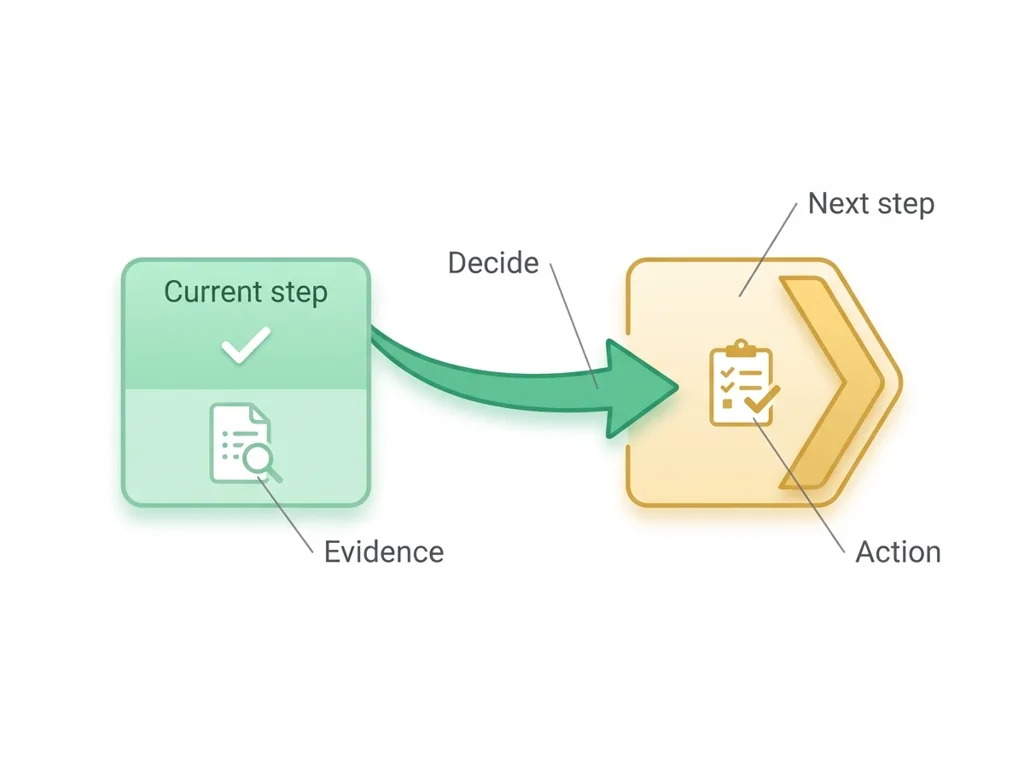
Write a conclusion that answers the question, says whether the hypothesis was supported, explains what the results mean, names the limitations, and suggests a next step.
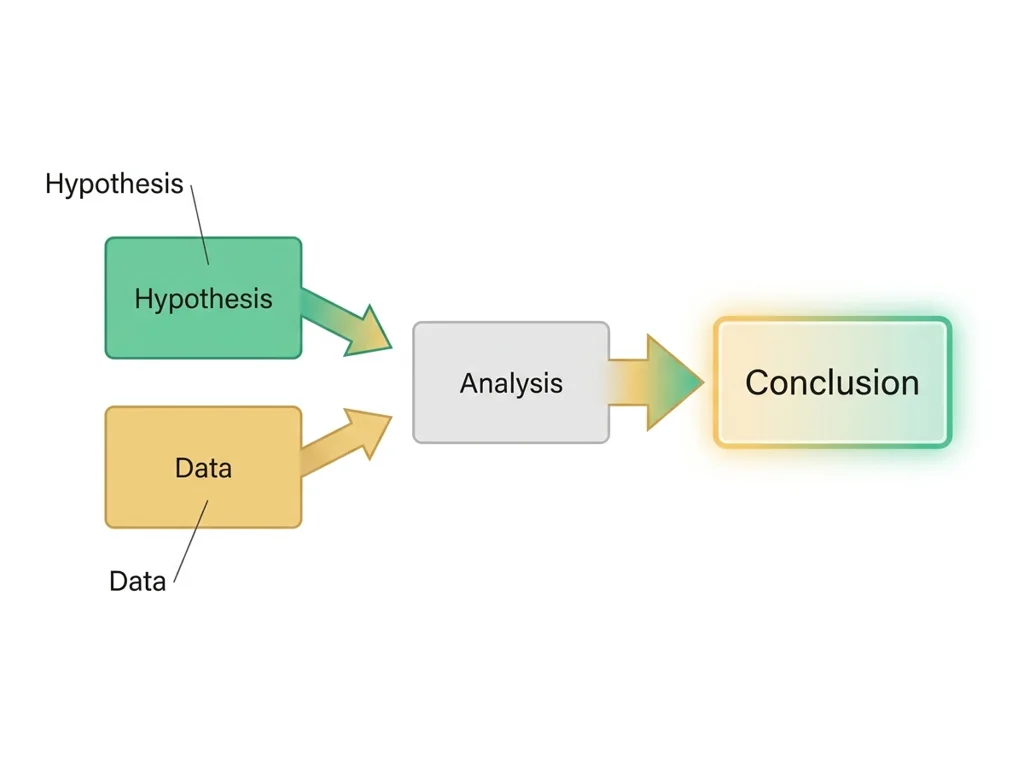
The Results section shows what happened; the Conclusion and Discussion explain what it means. This is where a report stops being a pile of numbers and becomes a finding. A strong conclusion does five jobs in order: it answers the original question, states whether the hypothesis was supported, explains what the results mean using a science idea, names the limitations and possible sources of error, and suggests a next step. Physicians write this section when they interpret a patient's test results and plan follow-up care, clinical researchers write it when they decide whether a drug trial met its goal, and epidemiologists write it when they translate raw case counts into a public-health recommendation. Learn to separate reporting the data from interpreting it, and to be honest about limits, and your conclusions stop sounding like guesses and start sounding like evidence-based claims a reader can trust.
- Common Core · WHST.9-10.2Write informative/explanatory texts that examine and convey complex ideas clearly, including a concluding statement that follows from and supports the information presented.
- Common Core · RST.9-10.7Translate quantitative or technical information (data and results) into words to explain what it means.
- NGSS · SEP-8Obtaining, Evaluating, and Communicating Information: communicate scientific findings clearly, distinguishing evidence from interpretation.
- Ohio · Ohio ELA W.9-10.2Write to inform or explain, drawing a conclusion that follows logically from the evidence presented.
- AP · AP Bio SP 6Justify scientific claims with evidence and evaluate the limitations of an investigation.
- Read values from a data table or graph: A conclusion is built from the results, so students must be able to read the numbers accurately before interpreting them.
- Write an if-then hypothesis: The conclusion has to say whether the hypothesis was supported, so students first need to know what a hypothesis is.
- Tell a research question apart from its answer: The first job of a conclusion is to answer the question, so students must be able to identify what was being asked.
Prerequisites are inferred: pending teacher review.
Re-learn the skill with worked practice and clear examples.
Write a full conclusion by running the five moves in order: answer the question, state whether the hypothesis was supported, explain what the results mean, name a limitation or source of error, and suggest a next step. Use the data table below and follow the worked model.
| Treatment | Bacterial colonies |
|---|---|
| Hand sanitizer | 12 |
| Plain water | 40 |
A student wrote: 'Hand sanitizer reduced bacteria more than plain water. This supported our hypothesis. The sanitizer plate had only 12 colonies versus 40, so fewer bacteria survived. Next, we would test five plates per group.' Which of the five conclusion moves is MISSING?
Reviewed- A.Stating whether the hypothesis was supported
- B.Explaining what the results mean
- C.Answering the question
- D.Naming a limitation or source of error
Show the worked solution ▾
Answer: D. Naming a limitation or source of error
- Step 1: Check the paragraph against all five moves: It answers the question, says the hypothesis was supported, explains the meaning (fewer survived), and gives a next step.
- Step 2: Name what is absent: There is no honest note about what could weaken the results, so the limitation move is missing.
Why it's right: The paragraph has the answer, the hypothesis judgment, the meaning, and a next step, but it never names a limitation or source of error, so that is the missing move.
- A: The hypothesis judgment is present ('This supported our hypothesis').
- B: The meaning is explained ('fewer bacteria survived').
- C: The question is answered in the first sentence (sanitizer reduced bacteria more).
Aligned to Common Core WHST.9-10.2: a complete concluding statement · reading level ~grade 9
Using the table (hand sanitizer 12 colonies, plain water 40 colonies), which sentence best EXPLAINS WHAT THE RESULTS MEAN rather than just repeating the data?
Reviewed| Treatment | Bacterial colonies |
|---|---|
| Hand sanitizer | 12 |
| Plain water | 40 |
- A.The colonies were counted two days after the plates were prepared.
- B.We should always use hand sanitizer.
- C.Because fewer colonies means fewer bacteria survived, the lower count shows the sanitizer killed more bacteria than water.
- D.The sanitizer plate had 12 colonies and the water plate had 40 colonies.
Show the worked solution ▾
Answer: C. Because fewer colonies means fewer bacteria survived, the lower count shows the sanitizer killed more bacteria than water.
- Step 1: Meaning uses a science idea: Look for a sentence that explains why the numbers matter, not one that just states them.
- Step 2: Compare the options: Only option B links the count to a science idea (fewer colonies means fewer survivors) to explain the result.
Why it's right: Explaining the meaning connects the data to a science idea, and option B explains that a lower colony count means fewer bacteria survived, so the sanitizer killed more.
- A: This is a method detail, not an interpretation of the result.
- B: This is a recommendation, not an explanation of the result.
- D: This just repeats the data; it does not explain what it means.
Aligned to RST.9-10.7: translate data into what it means · reading level ~grade 9
A hypothesis predicted that plants given fertilizer would grow taller than plants given only water. The fertilizer plants averaged 22 cm and the water plants averaged 22 cm. Which sentence correctly states the hypothesis result?
Reviewed- A.The hypothesis cannot be judged from this data.
- B.The hypothesis was not supported, because both groups grew to the same average height.
- C.The hypothesis was proven true.
- D.The hypothesis was supported, because fertilizer clearly grew taller plants.
Show the worked solution ▾
Answer: B. The hypothesis was not supported, because both groups grew to the same average height.
- Step 1: Compare the prediction to the data: The hypothesis predicted the fertilizer plants would be taller, but both groups averaged 22 cm.
- Step 2: Choose supported or not supported: Because the data did not show taller fertilizer plants, the hypothesis was not supported. Note we never say 'proven'.
Why it's right: The prediction was that fertilizer plants would be taller, but both averaged 22 cm, so the results did not agree with the prediction and the hypothesis was not supported.
- A: The data is enough to judge: equal averages mean the prediction was not met.
- C: A hypothesis is never 'proven'; we say supported or not supported.
- D: This is false: the averages are equal (22 cm each), so fertilizer did not grow taller plants.
Aligned to Common Core WHST.9-10.2: state whether the hypothesis was supported · reading level ~grade 9
- A student writes the conclusion of a PLTW lab as a five-move paragraph, checking off each move.
- A test-taker answers a short-response prompt by answering the question, judging the hypothesis, and explaining the meaning.
- A group revises a weak conclusion by adding the missing limitation sentence.
Fill these in as you work through the lesson.
- Conclusion (the one-sentence answer to the research question):
- Results vs. Discussion (data with no opinion vs. what the data means):
- Hypothesis supported (did the results agree with the prediction (never 'proven')):
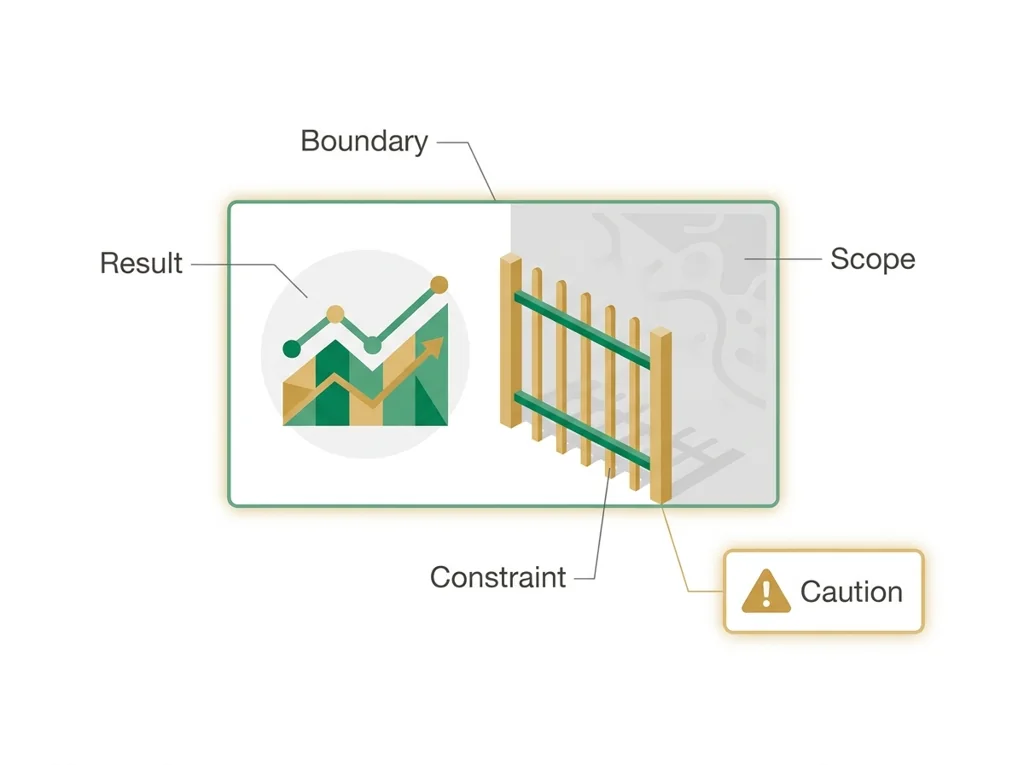
- Limitation (an honest note about what could weaken the results):
A conclusion answers the , states whether the hypothesis was , explains what the results , names a or source of error, and suggests a step.
- Write one sentence that answers the research question 'Does hand sanitizer reduce bacteria more than plain water?'
- The sanitizer plate had 12 colonies and the water plate had 40. Write a sentence explaining what that means, not just the numbers.
- Name one specific limitation of a study that used only one plate per group, and say which way it could shift the result.
Turn this into a five-move conclusion: sanitizer plate = 12 colonies, water plate = 40 colonies, and the hypothesis predicted sanitizer would win. Answer: ____. Hypothesis: ____. Meaning: ____. Limitation: ____. Next step: ____.
The vocabulary of this topic, shown in the way you will meet it.