
All careers
Career

Anesthesiologist

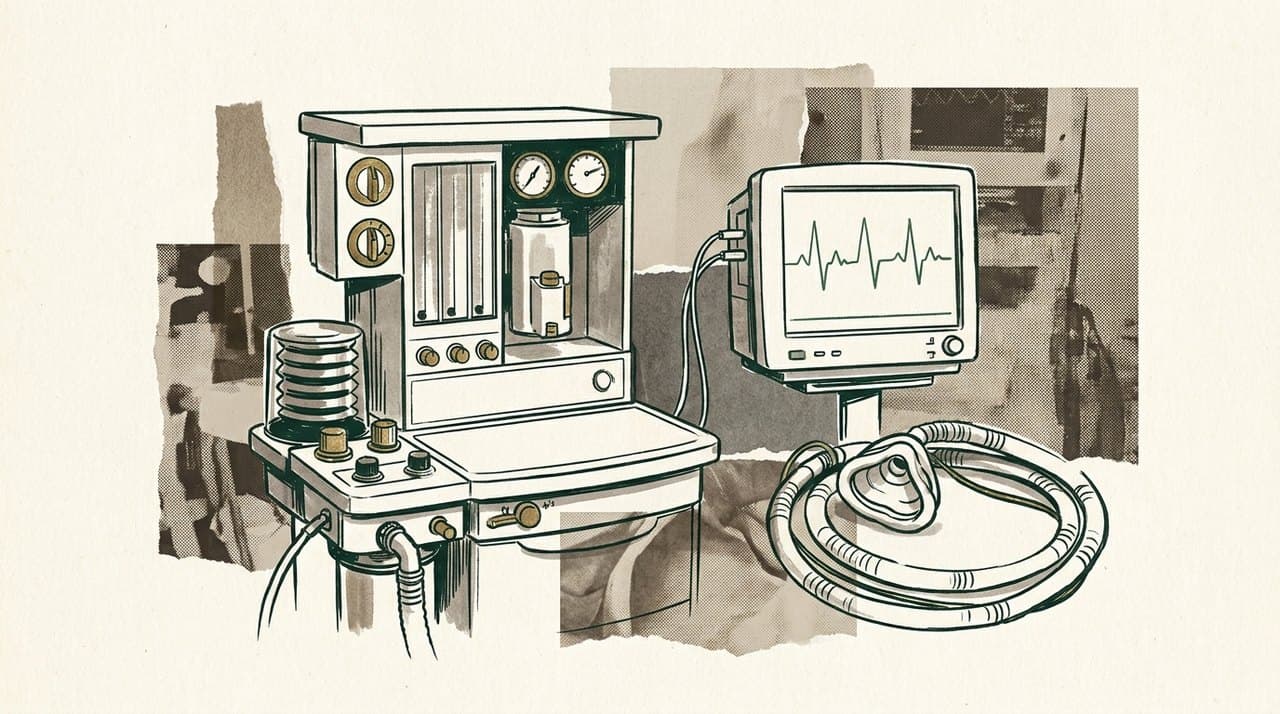
An anesthesiologist is a medical doctor who keeps you free of pain and alive while a surgeon operates, watching your breathing, heart rate, and blood pressure minute by minute and adjusting the drugs as your body responds.

Median pay (US)

$391,490

2025 · $188.22 an hour

O*NET source

Job outlook

Average

O*NET's band for this category is 3% to 4%, 2024-2034

O*NET source

To get in the door

Graduate or professional degree

Most of these occupations require graduate school.

Openings a year

1,300

projected, nationally

O*NET source

What the day actually looks like

  • Meet patients before surgery, take a medical history, and use exam and test results to judge how risky the operation will be for that specific body (O*NET task list for 29-1211).
  • Give the anesthetic by local, intravenous, spinal, or caudal route, then manage the airway and life support while the patient cannot breathe for themselves (O*NET task list).
  • Monitor heart rate, body temperature, blood pressure, and breathing during the operation and adjust the amount of anesthetic as needed (O*NET task list; also described in the BLS Occupational Outlook Handbook entry for physicians and surgeons).
  • Catch and treat adverse reactions fast, and record the anesthetic type, the amount, and the patient's status throughout the procedure (O*NET task list).
  • Provide pain relief after surgery, for patients in intensive care, for women in labor, and for people living with chronic pain (BLS Occupational Outlook Handbook description of anesthesiologists).

Skills you need first

  • Chemistry and biology you can actually use: gases and solutions, drug concentrations, and how the heart, lungs, and nervous system act on each other.
  • Math you can trust under pressure: ratios, unit conversions, and dose calculations where a misplaced decimal point is the whole problem.
  • A steady head when something goes wrong, because trouble in an operating room shows up in seconds, not hours.
  • Exact, honest record keeping, since what you gave and when you gave it becomes a medical and legal record.
  • Plain talk with frightened people, including patients and families in the minutes before surgery.
  • Stamina for long training and long shifts. BLS notes many physicians work long shifts including irregular and overnight hours, and time on call.

How long people stay

Anesthesiology is demanding, and the specialty measures its own strain. In a survey of American Society of Anesthesiologists U.S. attending members in November 2022, 67.7 percent of the 2,698 respondents (10.9 percent of 24,680 contacted) were at high risk for burnout and 18.9 percent met criteria for burnout syndrome. 78.4 percent had experienced recent staffing shortages, and 36.0 percent said they were likely to leave their job within 2 years. Perceived lack of support at work was the strongest associated factor (odds ratio 9.2, 95 percent CI 7.0 to 12.1), ahead of staffing shortages (odds ratio 1.96). Source: Afonso et al., Anesthesiology 2024;140(1):38-51, (PMID 37930155). The same research group's March 2020 survey of 3,898 anesthesiologists found 59.2 percent at high risk and 13.8 percent with burnout syndrome, so burnout rose over that period (Afonso et al., Anesthesiology 2021, PMID 33667293, figures read in the free PubMed abstract). BLS adds that many physicians work long shifts including irregular and overnight hours and time on call. Two honest caveats: the 36.0 percent figure is changing jobs, not leaving the specialty, and typical career length, tenure, and retirement age for anesthesiologists specifically are not verified here.

Where it is needed, and the different ways to do it

Demand for anesthesiologists is real, but it is not a boom, and the Ohio picture is flatter than the national one. BLS projects anesthesiologist employment rising from 45,300 in 2024 to 46,700 in 2034, a 3 percent change that O*NET labels average, with about 1,300 projected openings a year nationally. On the same page, Projections Central's 2022-2032 Ohio projection runs the other direction: 850 anesthesiologists in 2022 to 840 in 2032, minus 1 percent, about 20 openings a year statewide. The strongest evidence for a shortage is about staffing strain rather than headcount growth, and it comes from inside the profession. In a November 2022 survey of American Society of Anesthesiologists attending members, 78.4 percent of the 2,698 respondents reported recent staffing shortages at their workplace and 36.0 percent said they were likely to leave their job within 2 years (Afonso et al., Anesthesiology 2024;140(1):38-51,. Specialty-specific shortage figures circulating online, such as a shortfall of 8,000 to 12,000 anesthesiologists, traced only to staffing-industry write-ups and are not used here.

Hospital operating room

The core setting. General, regional, and sedation anesthesia for scheduled and emergency surgery. BLS notes that surgeons and anesthesiologists usually work in a sterile environment and must follow protocol to maintain it during procedures.

Labor and delivery

Epidurals and spinals for women in labor, and anesthesia for cesarean delivery. BLS lists pain relief for women in labor among anesthesiologists' duties.

Intensive care

Managing sedation, ventilation, and pain for the sickest patients in the building. BLS lists pain relief for patients in intensive care among anesthesiologists' duties, and some anesthesiologists add a critical care fellowship after residency.

Pain medicine clinic

Longer-term care for people living with chronic pain, using injections, nerve blocks, and medication plans rather than operating-room anesthesia. BLS lists patients suffering from chronic pain among those anesthesiologists care for.

Ambulatory surgery center

Same-day procedures such as scopes, hand surgery, eye surgery, and biopsies, where the patient arrives and goes home the same day instead of staying overnight.

Academic medical center

Practicing while teaching. Cleveland Clinic's Anesthesiology Institute, for example, states it offers 24 categorical anesthesiology residency positions each year, so attending physicians there supervise and teach residents alongside their own cases.

AI and this career

exposure: moderate

AI is already entering the operating room, but the peer-reviewed literature describes it as an assistive layer rather than a replacement. Two 2025 reviews independently conclude that AI should function as an adjunct that keeps the anesthesiologist making the decisions. The exposed tasks are watching, predicting, and documenting. The tasks that are not exposed are hands in an airway, the conversation with a frightened patient, and legal responsibility for a body under anesthesia. Rated moderate because a real and growing share of discrete tasks is automatable while the core of the job and its licensure requirements are not. This rating is our reading of the described task list, not a published estimate, and the evidence base here is thin: two narrative review articles, one of them in a small journal.

Tasks likely to change

  • Continuous monitoring and early warning. Reviews describe AI letting anesthesiologists intervene earlier in intraoperative hypotension, acute kidney injury, and tissue hypoxia, shifting the work from reacting to a number toward correcting a predicted trend (Dost et al., 2025).
  • Depth-of-anesthesia dosing. Closed-loop systems guided by physiologic and electroencephalogram feedback are described as maintaining anesthetic stability while reducing clinician workload (Dost et al., 2025; Maloney et al., 2025).
  • Preoperative sorting and paperwork. Predictive models for ASA physical status classification and airway risk stratification, plus natural language processing for documentation and operating room scheduling (Dost et al., 2025).
  • Procedural guidance. AI-assisted ultrasonography for regional anesthesia, and pharmacogenomic and perioperative pain profiling pointing toward more individualized dosing (Dost et al., 2025).

Tasks that stay human

  • Hands-on airway management and rescue. When a patient stops breathing, a person physically secures the airway and runs the resuscitation.
  • Accountability and skepticism. Maloney et al. (2025) name algorithmic bias, lack of transparency, hallucinations, and automation complacency as emerging risks, and conclude that clinician oversight, robust validation, and ethical safeguards are essential so that AI enhances rather than replaces clinical judgment.
  • The human conversation. Meeting a patient minutes before surgery, taking the history, weighing what that specific body will tolerate, and explaining it in words the patient can hold onto.
  • The length of the road. Nothing in this evidence base shortens the MD or DO plus residency requirement, and BLS still lists a doctoral or professional degree as the entry-level education.

What anesthesiologist work may look like

By the time a John Hay freshman finishes residency, the operating room may look calmer rather than emptier. The anesthesiologist will likely still meet the patient in pre-op, still put hands on the airway, still own the case. What may change is the ambient layer around them: a monitor that flags a blood pressure drop a few minutes before it happens instead of announcing it after, an infusion that trims itself against brain-wave feedback so the physician is correcting a trend rather than chasing a number, a note that largely writes itself out of the record. That may free attention for the genuinely hard cases and for supervising more rooms at once, which is also the uncomfortable part: if AI plus a care team lets fewer physicians cover more rooms, the pressure may land on how many anesthesiologists a hospital decides it needs, not on whether the specialty exists. The failure mode the literature actually names is not obsolescence but complacency, trusting a confident wrong number. So the skill that may matter most in 2040 is the one that matters now, knowing when the machine is wrong and being willing to say so out loud while everyone else is looking at the screen.

Sources:[1][2][3][4]

Open questions on this career

  • Two Case Western details are true but live on different pages than the one linked: the rule that MCAT scores older than three years are not accepted is on the school's MCAT page, and the admissions phone number is on its contact page. Both of those page addresses are now given so a family can reach them.
  • Career longevity specifics are not verified: typical years in practice, average retirement age, and what share of anesthesiologists leave the specialty rather than change employers. The 36.0 percent "likely to leave their job within 2 years" figure is a job change, not an exit from anesthesiology.
  • No Cleveland-specific or metro-area anesthesiologist pay figure was found in any government source. Only statewide Ohio figures are shown.

Pay and outlook come from O*NET, the US Department of Labor's occupation site, and every figure links back to it. We do not publish tuition or cost figures here: those change often, so use each school's own page and phone number below. Tell Mr. Mendoza if anything looks wrong.

Where you can train for it

4 programs

Read these as minimums, not targets.Meeting the numbers below is what lets you apply; it is not what gets you in. Selective programs admit far fewer people than apply, and admitted students are usually well above the minimum. Call the program and ask what last year's admitted class actually looked like. That one phone call is worth more than any number on this page.

Case Western Reserve University School of Medicine

Cleveland, OH · Doctor of Medicine (MD)

MD University Program

What they ask for

  • An MCAT score of 502 or greater is required to receive the secondary application. CWRU states this only as the secondary-application minimum, not as an interview threshold.
  • MCAT scores more than three years old are not accepted. This rule appears on CWRU's MCAT page rather than on the main requirements page.
  • Prerequisite coursework: general chemistry 2 semesters with 2 semesters of lab (AP/IB accepted); organic chemistry 1 semester with 1 semester of lab (AP/IB not accepted); biochemistry including metabolism 1 semester; writing or college English 1 semester.
  • A course of study leading to a baccalaureate degree at an accredited college in the US or Canada, completed before matriculation.
  • Letters of recommendation required. The entering class of 2025 averaged a 3.90 cumulative GPA (range 3.12 to 4.00) and a 3.87 science GPA (range 3.03 to 4.00). CASPer and the Altus Suite are not required.

The closest MD program to John Hay, on the Health Education Campus at 9501 Euclid Avenue. The admissions office phone above is published on CWRU's contact page at https://case.edu/medicine/md/about/contact-us (Office of Admissions, Suite #0111, Samson Pavilion), not on the requirements page. Note that CWRU separately runs a Master of Science in Anesthesia, but that program trains Certified Anesthesiologist Assistants, which is a different and shorter career, not the physician anesthesiologist route. For current tuition and cost of attendance, call the school or open its own financial aid pages.

Ohio University Heritage College of Osteopathic Medicine

Athens (with a Cleveland clinical campus), OH · Doctor of Osteopathic Medicine (DO)

Doctor of Osteopathic Medicine (D.O.) program

What they ask for

  • U.S. citizenship or a permanent visa is required.
  • Prerequisite coursework in semester hours: English 6, behavioral science 6, biology or zoology 8, general chemistry 8, organic chemistry 8, physics 8. Each prerequisite must be passed with a grade of C or better (2.0). Anatomy and physiology, biochemistry, immunology, and pharmacology are strongly encouraged.
  • Out-of-state applicants need at least a 495 MCAT and a 3.0 science GPA to receive a secondary application. Ohio residents receive a secondary application regardless of MCAT score.
  • Applicants with an MCAT below 500 will likely not be considered for an interview. The class of 2025 averaged a 503.46 MCAT (range 490 to 522), a 3.6 science GPA, and a 3.68 overall GPA. For fall 2026 entry the college accepts MCATs taken 2023 through 2025.

A DO is a fully licensed physician and enters anesthesiology residency the same way an MD does. This is the strongest osteopathic route with a Northeast Ohio tie: the college states that Cleveland campus students generally complete their clinical rotations in northeast Ohio. Ohio residency is a real advantage here, since Ohio applicants get a secondary application regardless of MCAT score. For current tuition, use Ohio University's own bursar page or call the college.

The Ohio State University College of Medicine

Columbus, OH · Doctor of Medicine (MD)

MD Program

What they ask for

  • Prerequisites: biology 2 semesters; general chemistry 2 semesters with lab; biochemistry 1 semester; organic chemistry 2 semesters with one year of lab; physics 2 semesters with lab. All must be passed with a minimum grade of C- or higher.
  • Prerequisite coursework must be completed within the ten years leading up to the enrollment date.
  • MCAT is required and must be taken within three years of the application.
  • A minimum of two letters of recommendation, at least one from a professor who taught and graded you in a biology, chemistry, physics, or math course, or a premedical committee composite letter.

The largest in-state public MD option. The 2025 entering class had 211 students, a 3.83 class GPA, a 3.79 science GPA, a 514 MCAT composite, and 58 percent Ohio residents, from 8,731 applications (https://medicine.osu.edu/education/md/admissions/before-you-apply/entering-class-profile). An earlier draft of this page carried tuition and cost-of-attendance dollar figures for OSU that did not match the school's own published numbers, so they were removed. Use OSU's own cost page at https://medicine.osu.edu/student-resources/cost.

Cleveland Clinic Anesthesiology Institute

Cleveland, OH · Completion of ACGME-accredited anesthesiology residency training, the step after medical school that turns a physician into an anesthesiologist

Anesthesiology Residency (integrated Clinical Base Year plus Clinical Anesthesia years CA-1 to CA-3)

What they ask for

  • You must already hold an MD or DO. Applications go through the Electronic Residency Application Service (ERAS), and all 24 categorical positions each year are filled through the National Residency Matching Program (NRMP).
  • USMLE Step 1 transcript is required, and USMLE Step 2 must be completed before matriculation.
  • Three letters of recommendation, a Medical Student Performance Evaluation (Dean's Letter), transcript, curriculum vitae, and a personal statement with a program-specific paragraph.

Residents are paid a salary rather than charged tuition; the published salary rates are listed in the pay section of this page. The program also states residents get 20 vacation or time-off days each academic year. Included because it is the actual anesthesiology-specific training step and it is in Cleveland. It starts roughly 12 years after 9th grade: four years of high school, four of college, four of medical school, then this four-year residency. A John Hay student can see the whole path end here in their own city.

Need help or have feedback?
Ask a question Family feedback