Control Groups & Controlled Experiments
Set up a fair test by comparing a treated group against an untreated control while every other variable is held the same.
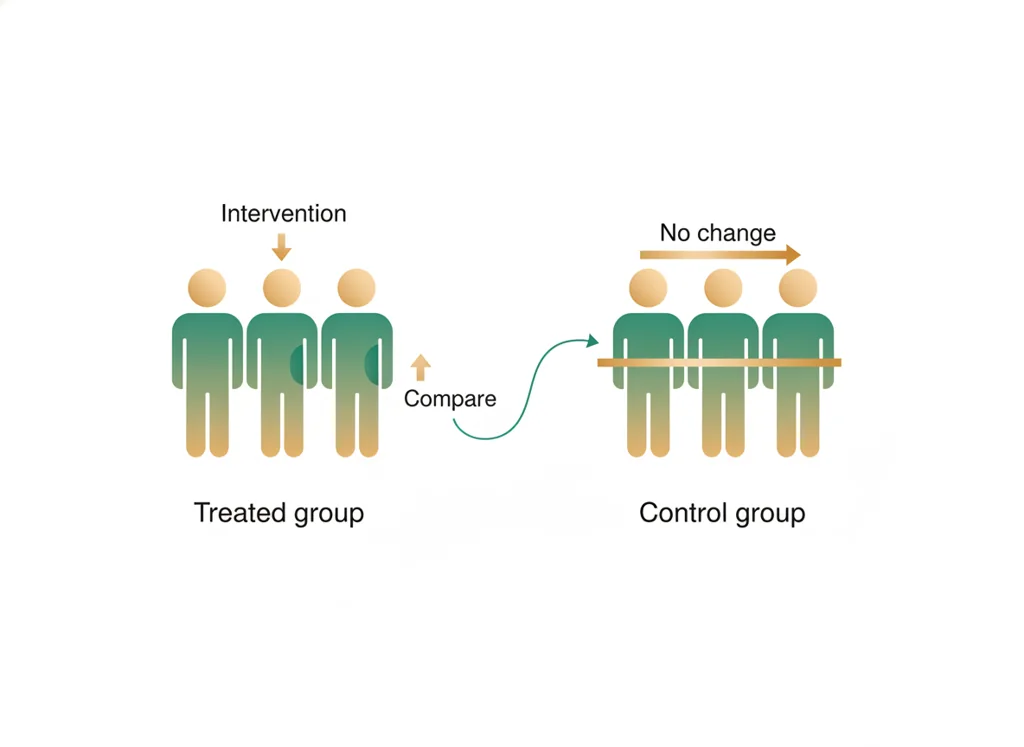
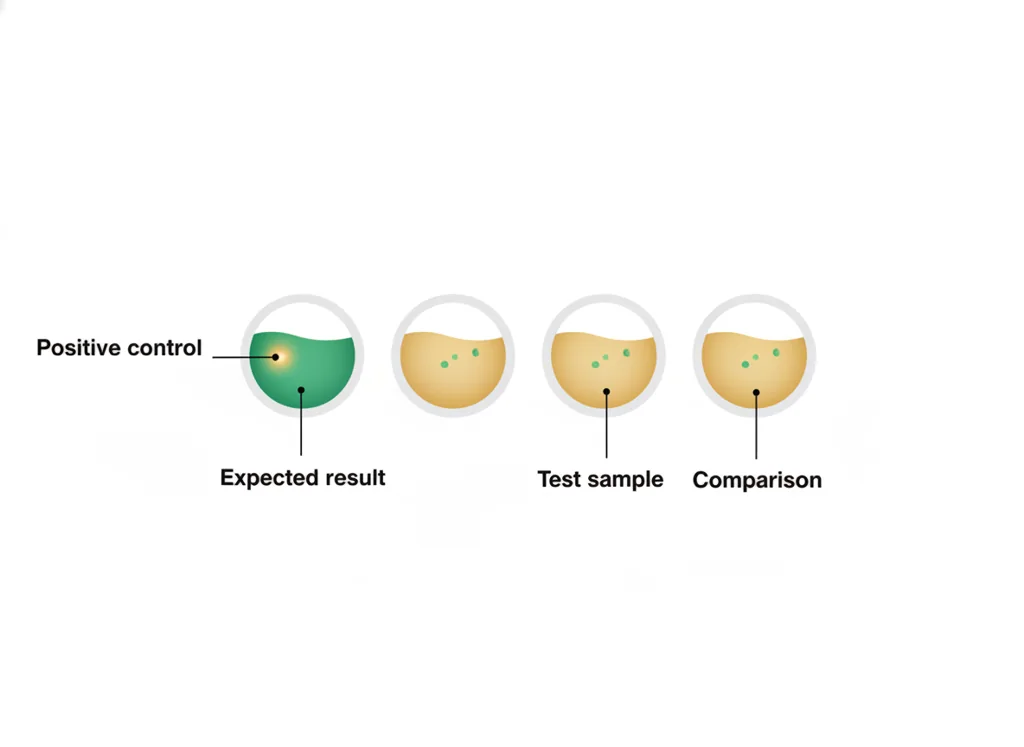
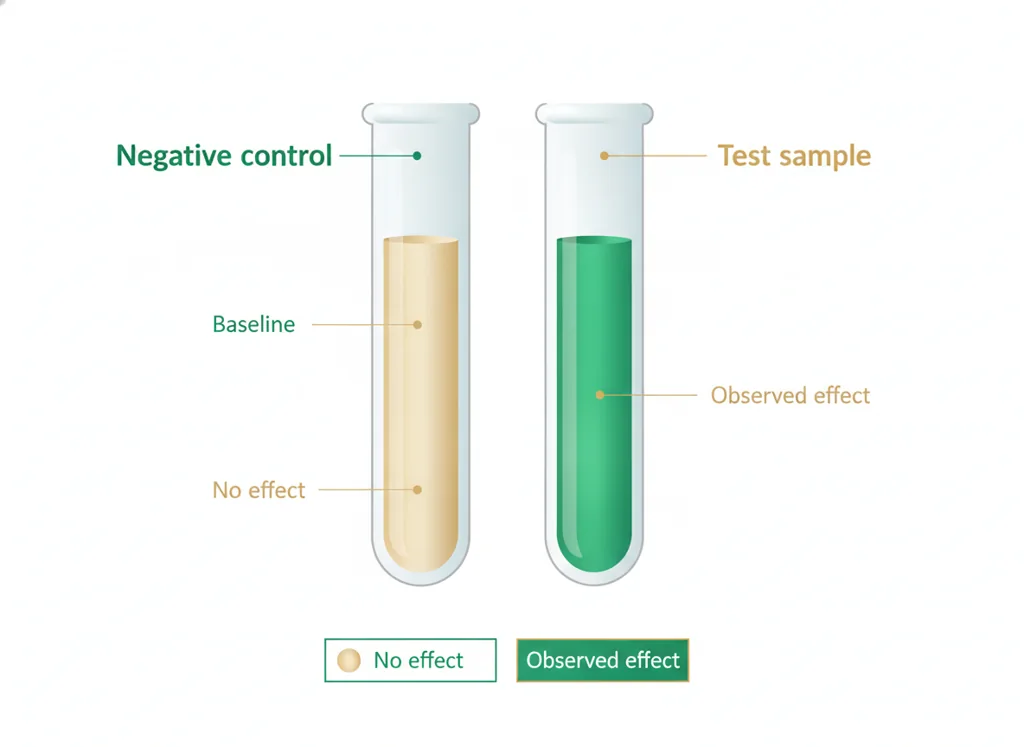
An experiment can only answer one question: did the thing I changed cause the result? You cannot answer that from the treated group alone, because you have nothing to compare it against. The control group is that comparison: it is treated exactly like the experimental group except it does not receive the treatment (or it receives a fake treatment called a placebo). If the two groups end differently and everything else was held the same, the treatment is the reason. Drug researchers build controls into every clinical trial so they can prove a new medicine beats a sugar pill rather than just the passage of time. Microbiologists run a positive control (a plate they know should grow) and a negative control (a plate that should stay blank) so they can trust the reading on their real sample. Agricultural scientists compare fertilized plots against untreated plots on the same soil, and quality-control technicians compare a new batch against a known-good standard. Without a control, a result is just a story; with one, it is evidence.
- NGSS · SEP-3Planning and Carrying Out Investigations: design a controlled investigation that identifies the variable being tested and holds all other variables constant so the results are interpretable.
- NGSS · SEP-4Analyzing and Interpreting Data: compare a treatment group to a control group to decide whether an observed difference is due to the treatment.
- Common Core · HSS-IC.B.3Recognize the purposes of and differences among sample surveys, experiments, and observational studies; explain how randomization and controls relate to each.
- Ohio · Ohio HS Bio SPDesign and conduct scientific investigations that use controls and control variables so a cause-and-effect conclusion is justified.
- AP · AP Bio SP 3 (Experimental Design)Identify the control group and the controlled (constant) variables in an experiment, and explain why a control is required to support a claim.
- Independent vs dependent variable: You must name the one variable you change (independent) before you can say what the control group leaves unchanged.
- Compare two groups fairly: The whole point of a control is a fair comparison, so students first need the idea that only one thing should differ between groups.
- Read counts and rates from a table: Deciding whether a treatment worked means reading each group's result off a table and comparing them.
Prerequisites are inferred: pending teacher review.
Re-learn the skill with worked practice and clear examples.
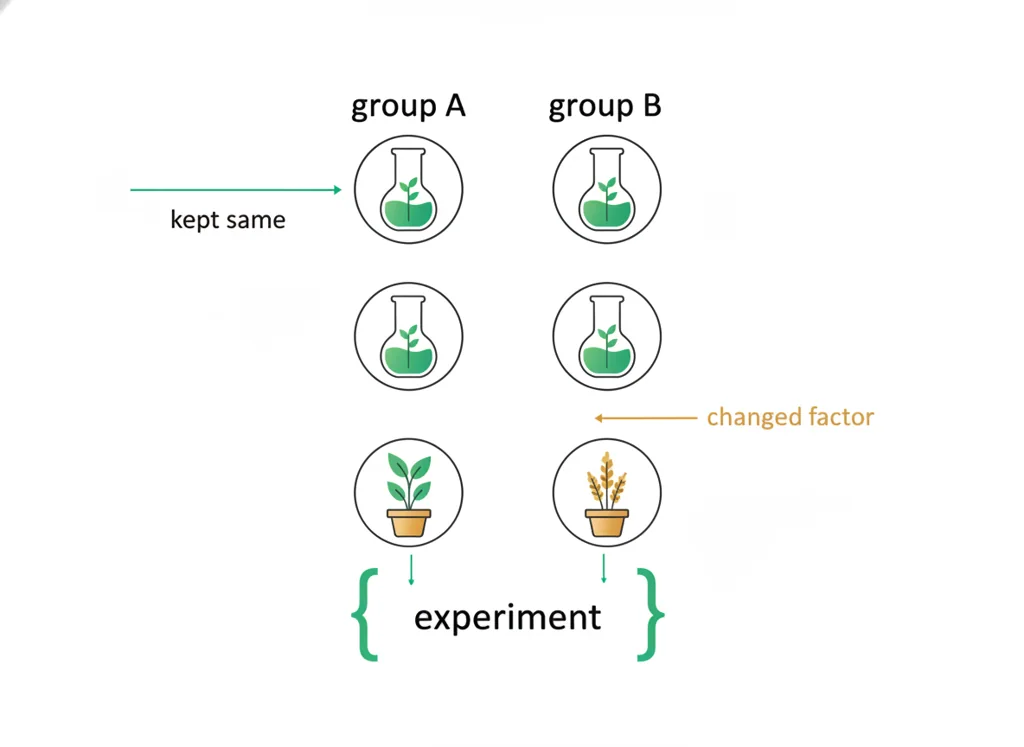
Build a fair test in three moves: choose the one variable you will change (the treatment), give the control group everything except that treatment, and hold every other condition the same for both groups (the controlled variables). Then compare the two groups' results. If they differ and only the treatment differed, the treatment is the cause.
In a seed-sprouting study, 20 seeds get plain water (control) and 20 seeds get a fertilizer solution. The table shows how many sprouted. How many MORE seeds sprouted in the fertilizer group than in the control group?
Reviewed| Group | Seeds planted | Seeds sprouted |
|---|---|---|
| Control (plain water) | 20 | 8 |
| Fertilizer (treatment) | 20 | 15 |
- A.3 more
- B.8 more
- C.7 more
- D.15 more
Show the worked solution ▾
Answer: C. 7 more
- Step 1: Read both counts: Control sprouted 8; fertilizer sprouted 15.
- Step 2: Subtract: 15 - 8 = 7 more seeds sprouted in the fertilizer group.
Why it's right: Comparing the treated group (15) to the control (8) gives 15 - 8 = 7 more sprouted seeds.
- A: This is not the difference; 15 - 8 is not 3.
- B: 8 is the control's count, not the difference between groups.
- D: 15 is the fertilizer count alone; you must subtract the control.
Aligned to NGSS SEP-4: compare treatment to control · reading level ~grade 9
A group tests whether a disinfectant kills bacteria. Plate A gets disinfectant. Plate B is set up exactly the same but gets no disinfectant. Which choice correctly names the roles?
Reviewed- A.Both plates are controls
- B.Neither plate is a control because both have bacteria
- C.Plate B is the control; Plate A is the experimental group
- D.Plate A is the control; Plate B is the experimental group
Show the worked solution ▾
Answer: C. Plate B is the control; Plate A is the experimental group
- Step 1: Find the treatment: The treatment being tested is the disinfectant, which is on Plate A.
- Step 2: Find the untreated group: Plate B gets no disinfectant, so it is the control; Plate A is the experimental group.
Why it's right: The group without the treatment is the control, so Plate B (no disinfectant) is the control and Plate A is the experimental group.
- A: The two plates have different roles, so they cannot both be controls.
- B: Having bacteria does not disqualify a plate from being a control; the untreated plate is still the control.
- D: This reverses the roles; the treated plate is not the control.
Aligned to AP Bio SP 3: assign control vs experimental · reading level ~grade 9
Two plant groups are meant to test fertilizer. The control group sits by a cold north window; the fertilizer group sits on a warm heated shelf. Everything else is the same. What is the flaw in this design?
Reviewed- A.Temperature was not controlled, so it could explain a difference instead of the fertilizer
- B.The control group should also get fertilizer
- C.Nothing is wrong; only the fertilizer differs
- D.The experiment has too many plants
Show the worked solution ▾
Answer: A. Temperature was not controlled, so it could explain a difference instead of the fertilizer
- Step 1: List what differs between groups: The groups differ in TWO ways: fertilizer AND temperature (cold window vs warm shelf).
- Step 2: Spot the uncontrolled variable: Because temperature also changed, you cannot tell whether fertilizer or warmth caused any difference. Temperature should have been a controlled variable.
Why it's right: A controlled experiment changes only the treatment; here temperature also changed, so it is an uncontrolled variable that could explain the results instead of the fertilizer.
- B: If the control got fertilizer too, there would be no untreated baseline at all.
- C: Two things differ (fertilizer and temperature), so it is not a fair test.
- D: The number of plants is not the flaw; the uncontrolled temperature is.
Aligned to NGSS SEP-3: identify an uncontrolled variable · reading level ~grade 9
- A microbiology class keeps two agar plates identical (same medium, same incubation) and applies disinfectant to only one, so any difference in bacterial growth points to the disinfectant.
- A greenhouse team gives every tray the same light and water and changes only the fertilizer, so the harvest difference can be blamed on the fertilizer.
- A student peer-reviews a classmate's design and catches that the two groups were kept at different temperatures, flagging temperature as uncontrolled.
Fill these in as you work through the lesson.
- Control group (the group with no treatment (baseline)):
- Experimental group (the group that gets the treatment):
- Controlled variable (kept the same for both groups):
- Confounding (two variables changed at once):
In a controlled experiment, the group does not get the treatment, the group does, and every other condition is a variable kept the same, so any difference points to the .
- In a fertilizer plant study, name the treatment, the control group, and two variables you would keep the same.
- A positive control should ____ and a negative control should ____; explain what it means if each one behaves the wrong way.
- Give an example of a design where two variables change at once, and explain why its results are confounded.
A study gives 20 seeds plain water (control) and 20 seeds fertilizer, keeping light and water amount the same. Control: 8 sprout. Fertilizer: 15 sprout. The number of extra seeds that sprouted with fertilizer is 15 - 8 = ____ seeds, and because only the fertilizer differed, that difference can be credited to the ____.
The vocabulary of this topic, shown in the way you will meet it.